REVIEW · PUERTO VALLARTA
Make your own Mole Poblano in Puerto Vallarta
Book on Viator →Operated by ChocoMuseo Puerto Vallarta · Bookable on Viator
Mole class in Puerto Vallarta tastes like Mexico. This mole poblano workshop is interesting because you start by hunting ingredients at a local market, then you learn how that big list of chilies, nuts, and cacao turns into sauce magic. I love the way the shopping part teaches you what to look for, especially Mexican cacao and chilies, and I love that you leave with a jar of mole you helped make.
One heads-up: there are stairs and cobblestone walking around the market area, so it may be tough if you have mobility limits.
In This Review
- Key things to know before you book
- Mole Poblano in Puerto Vallarta: what makes this class special
- Where you meet: ChocoMuseo Puerto Vallarta and the kitchen setup
- The market mission: cacao and chilies you’ll actually learn to recognize
- The mole-making steps: 25+ ingredients and real technique
- Meeting the chefs: the teaching style matters
- Lunch with what you made: mole poblano, chicken, rice, and a drink
- Taking home your jar of mole: packing and using it later
- How much is it really worth? Price vs what you get
- Timing, transfers, and what to plan for your day
- Who should book this Puerto Vallarta mole class?
- Should you book the Mole Poblano workshop?
- FAQ
- What is the duration of the Mole Poblano workshop?
- Where is the tour meeting point?
- What time does the experience start?
- Is the workshop offered in English?
- What does the price include?
- Is there a vegetarian option?
- How many people are in the group?
- Do I take anything home?
- What if the weather is bad or I need to cancel?
Key things to know before you book
- Small group size (max 5) means more hands-on time grinding spices and building your sauce.
- Market-to-kitchen flow so you learn ingredients before you touch the molcajete-style work.
- You make mole from scratch using 25+ ingredients, including nuts, spices, and cacao beans.
- Lunch is included with mole over chicken (and a vegetarian option) plus rice.
- You take home your own jar that’s meant for checked luggage.
Mole Poblano in Puerto Vallarta: what makes this class special
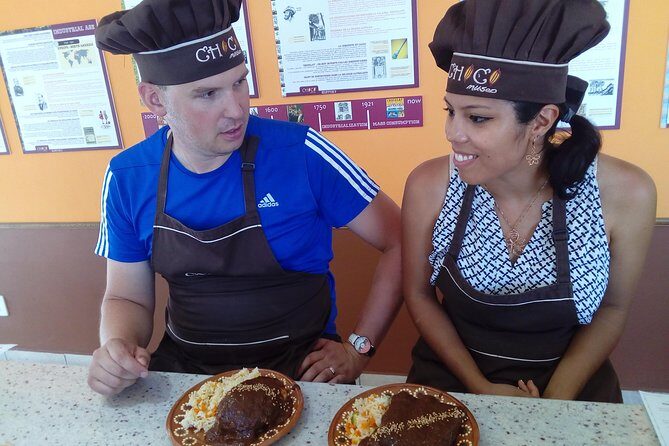
Mole poblano has a reputation for being complicated. This class earns that reputation in a good way. You don’t just get a recipe card and a vague sauce story. You get the whole process, starting with ingredients, then moving step-by-step through making the sauce, and finally sitting down to eat the results.
The best part for me is the ingredient education. Chilies can look similar until you learn what matters. Cacao is another big one—this is about learning how it shows up in flavor, not just buying a chocolate product. By the time you’re cooking, you understand why certain ingredients go in and what each step is trying to do.
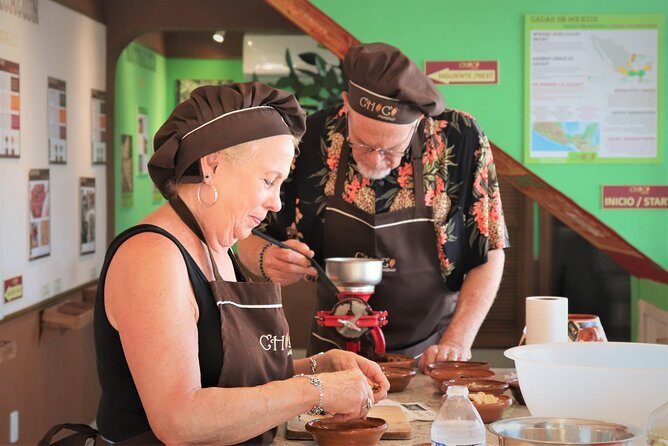
And you’ll like the hands-on nature. With a group kept small (up to 5 people), you’re more likely to chop, grind, and stir than watch someone else do everything. That matters, because mole really is work, and the effort is part of the satisfaction.
You can also read our reviews of more tours and experiences in Puerto Vallarta.

Where you meet: ChocoMuseo Puerto Vallarta and the kitchen setup
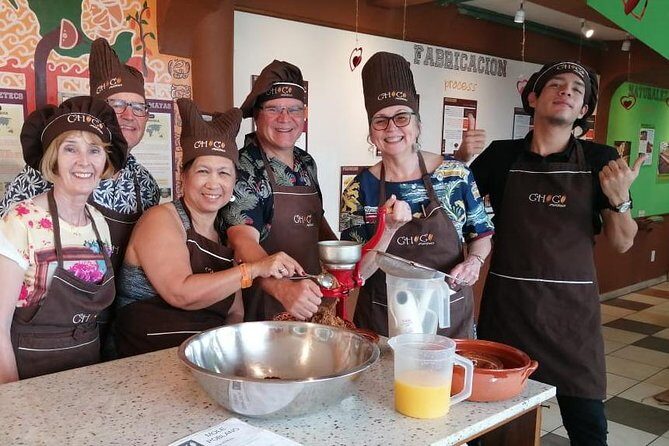
Your morning starts at ChocoMuseo Puerto Vallarta in Centro (Josefa Ortiz de Domínguez 128). The workshop start time is 10:30 am, and it runs about 3 hours. It ends back at the meeting point.
Inside, you get guided by the museum team and a cooking/market crew. Expect a real workshop feel: aprons and hats for the cooking portion so you can focus on the food (and not worry about a little mess). One nice detail from the experience is that the kitchen setup is described as clean and air-conditioned, which makes a big difference when you’re working over spices and hot ingredients.
There’s also a view angle. More than one person notes that the kitchen area looks out toward the Malecón, which adds a calm “I’m on vacation” vibe while you’re doing hands-on food work. It turns the class from purely instructional into something more like a fun, productive day.
The market mission: cacao and chilies you’ll actually learn to recognize
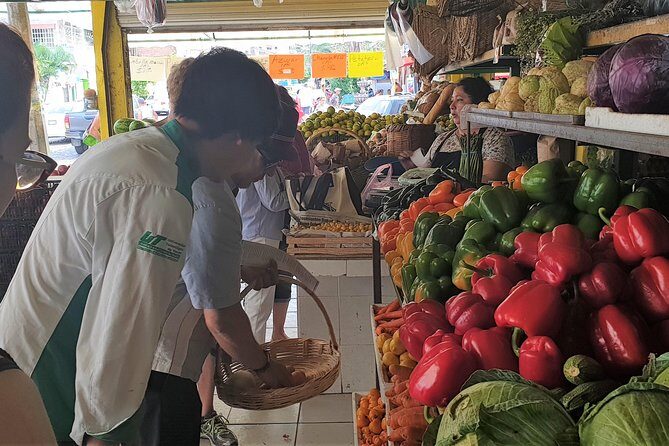
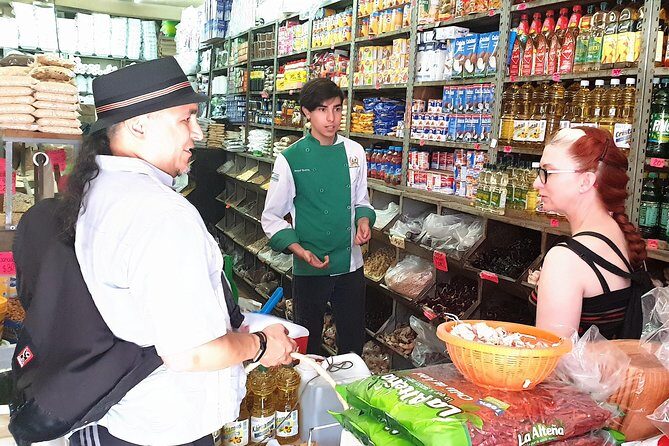
The market stop is where the class earns its value. Instead of showing you mole ingredients from a shopping list, you go out first and shop with a guide. It’s a short taxi ride to the market (about 5 minutes), and then you’re walking, tasting, and picking ingredients like a cook, not a tourist.
You’ll focus on things that define mole poblano: chilies and cacao beans. You’ll learn how to recognize different chilies and what to look for when choosing quality. That’s useful at home because many people try to make mole later with whatever chili powder they can find, and the result usually tastes flat or off. Learning the ingredient logic here gives you a better shot later.
In the market, you may also get little context for how vendors operate and what makes certain ingredients worth your money. Some classes include extra stops in the broader food ecosystem—like tortilla-making places—so you understand how corn products relate to mole. Even if you’re mostly focused on cacao and chilies, the added food-history context makes the whole meal feel more connected.
Practical note: the market area includes cobblestones and steps, so if you’re walking carefully, you’ll want good shoes.
The mole-making steps: 25+ ingredients and real technique
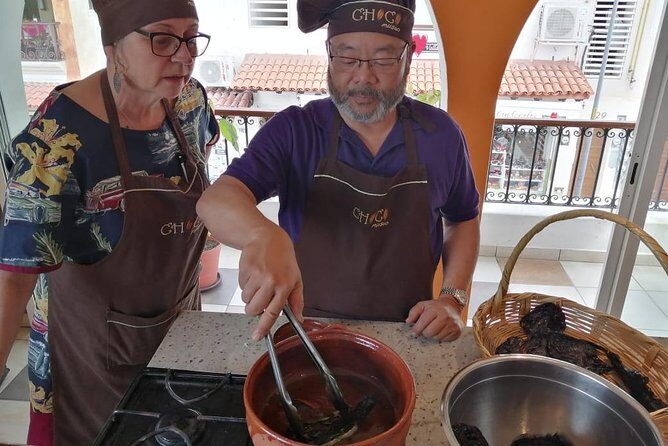
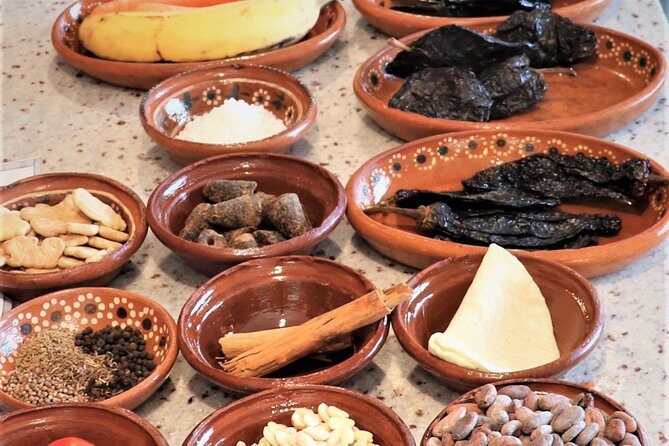
Back at the workshop space, you get taught the origin and history of mole poblano. Then you get to work. The key point here is that you’re not just stirring a sauce and calling it mole. You’re building something with more than 25 ingredients, including nuts, spices, and cacao beans.
The instructors guide you through what each ingredient does and why. That’s important because mole can taste very different depending on technique: toasting, grinding, balancing bitterness, and building depth over time. People highlight that the process is organized and not overly complicated in the moment, even though the ingredient list is huge.
You’ll also spend time doing the manual work—chopping and grinding spices with the tool style used in the class. Reviews mention grinding as a standout part of the experience. That physical step slows you down in a good way. It helps mole become a process you can picture later, not just an end result you remember by taste.
If you have dietary needs, you should plan to communicate them when you book. The experience data includes vegetarian options, and there are also notes that accommodations can happen (for example, one person reports a gluten-free version). So the safest move is to share your needs early.
Meeting the chefs: the teaching style matters
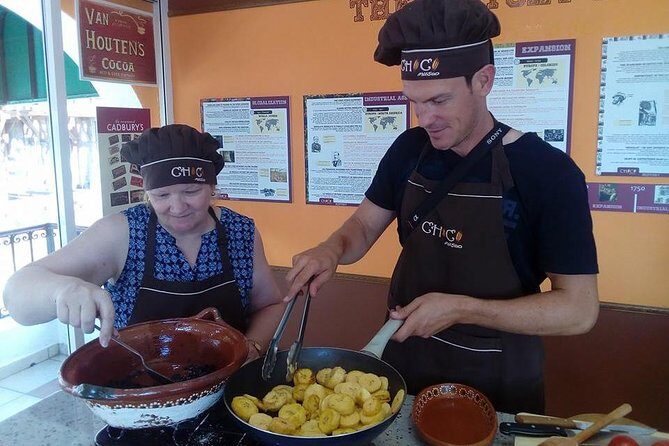
This is one of those tours where the instructor can make or break it. The good news: the classes are consistently praised for clear instruction and a friendly, fun tone.
Different workshop leaders show up in the experience details, including chefs and guides such as Zoar, Elias, and Marteen (also referenced as Martin in one note), and another instructor named Mouan. The common thread is that they explain history and cooking technique in plain language, not chef-speak.
What you’re really looking for is this: you want someone who can connect the why to the how. That’s exactly what people call out—stories and history alongside practical steps, plus tips like what to notice while shopping and how to follow the sequence once you’re cooking.
And because the group stays small, you’re more likely to ask questions and get feedback while you work. If you’ve ever taken a cooking class where you feel like you’re just along for the ride, this structure is designed to reduce that.
Lunch with what you made: mole poblano, chicken, rice, and a drink
The reward comes quickly. After your cooking session, you eat the mole you made.
Your included lunch is mole poblano with chicken and rice. There are vegetarian options as well, so you can still build and eat mole without chicken. The day isn’t only about tasting sauce; it’s about tasting the full plate in a Mexican context: mole + rice + the main protein choice.
You’ll also get a non-alcoholic drink made with fruits or plants bought in the market. That ties your flavors back to the market rather than turning lunch into a generic beverage.
One realistic expectation: mole is bold and layered. If you mostly know mole from jarred versions, you’ll likely notice a difference. This class aims to show you how deep flavor comes from combining roasted/toasted aromatics, cacao, spices, and the right cooking rhythm. It’s one meal, but it’s a lesson in why mole takes effort.
Taking home your jar of mole: packing and using it later
Here’s the “I’ll remember this later” part. You’ll make and take home a jar of your own mole. The experience specifically notes that the jar should go with checked luggage. That detail matters. Glass plus carry-on rules plus travel time can turn into stress fast, so plan for checked baggage or shipping if that’s your normal travel approach.
At home, your jar gives you a starting point. You can use it to sauce chicken, stir into beans, or make quick mole-based meals. You’ll also have something many people don’t after a cooking class: the process in your head. Even if you don’t recreate every single step perfectly, you’ll know the order, the ingredient roles, and why the flavor works.
If you’re short on time for dinner after the class, this jar can be your shortcut. It’s also a great souvenir because it’s edible and personal—made by you, not bought in a shop.
How much is it really worth? Price vs what you get
The price is $87.90 per person for about 3 hours. That’s not a bargain price, but it also isn’t just “pay for a recipe.” You’re paying for several things at once:
- Guided market shopping for key ingredients like cacao and chilies
- Taxi transfer to the market (round-trip included for that segment)
- A full hands-on cooking workshop with aprons and hats
- An included lunch with mole and rice (plus a non-alcoholic drink)
- A take-home jar you prepared yourself
When you add those pieces up, the cost feels more like you’re buying a structured food education plus a meal plus a souvenir. If your travel style is hands-on and you like learning ingredients, it’s a strong use of time. If you only want a quick food taste with minimal work, you might feel like mole is a lot—because it is.
Timing, transfers, and what to plan for your day
The workshop begins at 10:30 am at the ChocoMuseo Puerto Vallarta meeting point in Centro. The activity ends back at that same meeting point.
One thing to plan around: transportation to and from the museum before and after the workshop isn’t included. The market transfer is included, but you’re responsible for getting yourself to the museum in the first place. Since you’ll be in Centro, you’ll probably have options nearby, but don’t count on “walk over from your hotel” unless you know it’s close.
For weather: the experience requires good weather. If weather turns, the class can be rescheduled or refunded, but you’ll still want a flexible day.
Finally, think about your schedule for photos and shopping. You’ll likely want to keep your hands free for ingredients and cooking tasks, and you’ll have a jar at the end. Plan a calm next few hours so you’re not rushing.
Who should book this Puerto Vallarta mole class?
This workshop fits best if you want more than a meal. If you like food learning—especially learning what to buy and how ingredients change flavor—you’ll enjoy this.
It’s also a great choice for:
- Couples and small groups who want an interactive morning
- Families who prefer a structured activity with a real payoff at lunch
- Travelers who love Mexican cuisine and want the process behind a dish
Because the group cap is up to 5 people, it’s less chaotic than bigger tour groups. You’ll likely get more instruction per person, which makes the work easier to follow.
The main mismatch is accessibility comfort. Between the stairs and cobblestones, this may be challenging for anyone with mobility limitations.
Should you book the Mole Poblano workshop?
If you’re the kind of traveler who thinks, I want to understand what I’m eating, book it. The combo of market learning, hands-on mole-making, and a jar to take home gives this class a clear identity. You don’t just taste mole here—you build it.
Book it especially if you plan to cook at home later and want the ingredient logic, not just the final flavor. And if you’re worried about access, plan your route carefully before you go.
FAQ
What is the duration of the Mole Poblano workshop?
It runs for about 3 hours (approx.).
Where is the tour meeting point?
It starts at ChocoMuseo Puerto Vallarta, Josefa Ortiz de Domínguez 128, Centro, 48300 Puerto Vallarta, Jal., Mexico.
What time does the experience start?
The start time is 10:30 am.
Is the workshop offered in English?
Yes, the tour is offered in English.
What does the price include?
It includes a tour guide for the museum and market, round-trip taxi transfer to the market (about 5 minutes), all market ingredients, apron and hat, lunch (mole with chicken and rice, or vegetables for vegetarian option), a non-alcoholic drink made with fruits/plants bought in the market, and a jar of mole to take home.
Is there a vegetarian option?
Yes. The lunch can be made with vegetables instead of chicken.
How many people are in the group?
The maximum is 5 travelers.
Do I take anything home?
Yes, you take home a jar of the mole you prepared.
What if the weather is bad or I need to cancel?
The experience requires good weather. If it’s canceled due to poor weather, you’ll be offered a different date or a full refund. You can cancel up to 24 hours in advance for a full refund. Within 24 hours, you won’t get a refund.