REVIEW · PUERTO VALLARTA
Puerto Vallarta Historical El Centro: A Self-Guided Audio Tour
Book on Viator →Operated by VoiceMap Audio Tours · Bookable on Viator
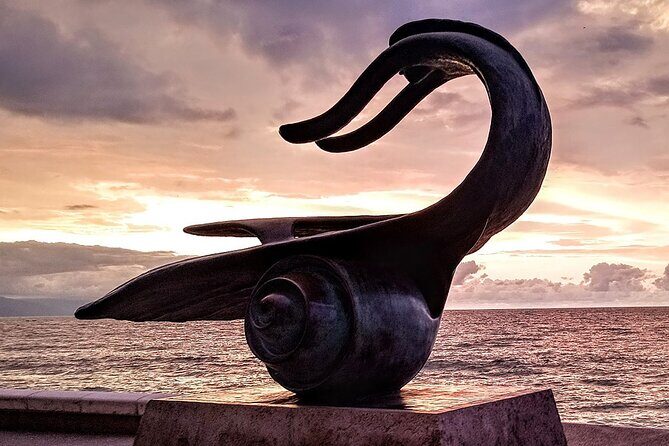
Stories that guide your feet. This self-guided VoiceMap walk starts at the Seahorse on the Malecón and leads you through Puerto Vallarta’s El Centro highlights with an easy, turn-by-turn audio flow. I like that the tour is built for wandering at your pace, yet still feels structured and clear.
Two things I really appreciate are the offline audio/maps option and the way each stop ties the physical spot to a specific story. If you want “see it, hear it, then move on,” this fits the bill well. One possible drawback: it’s self-guided, and you’ll want to bring a smartphone and headphones since they’re not included.
In This Review
- Key highlights you’ll feel on the walk
- Why the Malecón is the perfect classroom for El Centro
- Price and time: $9.99 for a repeatable, offline experience
- Getting started at the Boy on the Seahorse (and using VoiceMap right)
- Stop-by-stop: what you’ll learn as you walk through El Centro
- Los Arcos Amphitheater: why it was built
- Plaza de Armas: where people gathered, talked, and bought goods
- Sergio Bustamante Gallery: one artist, many layers
- Peyote People: step into a Huichol shop
- Vallarta Chocolate and Cigar Factory: a quick taste of local trade
- Villa Leonarda and Sergio Toledano: Liz Taylor and Richard Burton’s orbit
- Casa Kimberly: the bridge used by Richard Burton
- Augustine Flores Contreras sculpture: education as a mission
- Church of Our Lady of Guadalupe: a 40+ year build
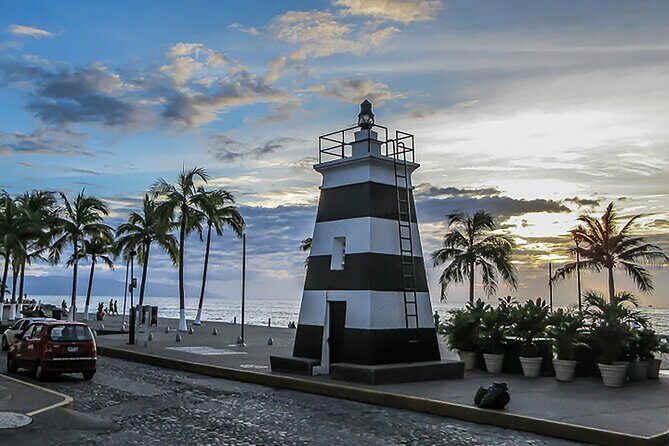
- Faro del Malecón: a navigation signal from 1930
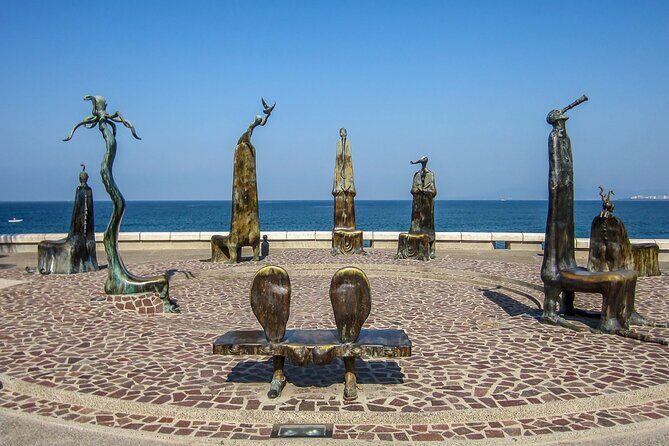
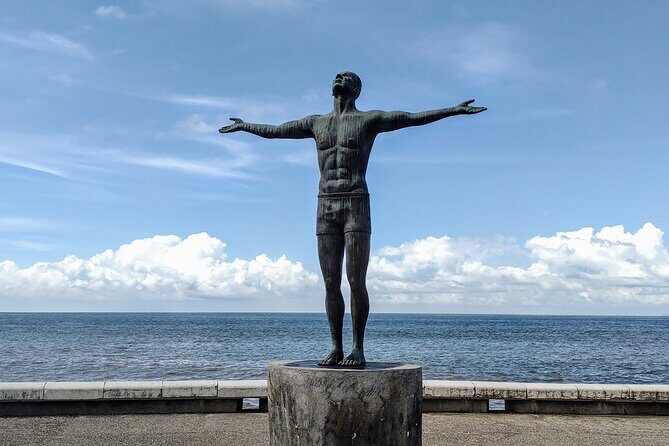
- The sculpture trail: 30 works along the Malecón
- Sergio Bustamonte’s In Search of Reason
- Rotunda del Mar and Nature as Mother: 1997 installations
- Flying Papantla: why it matters
- Finish: The Millennia sculpture
- What I’d watch for (so you actually enjoy every stop)
- Who this tour is for
- Quick practical FAQ-style notes (the stuff that matters)
- FAQ
- How long is the Puerto Vallarta Historical El Centro self-guided audio tour?
- Where does the tour start and end?
- What language is the audio in?
- Does it work offline?
- What do I need to bring?
- Is food or drink included?
- Is this a private tour?
- Are there any tickets or entrances required?
- When is the tour available?
- Should you book this audio walk?
Key highlights you’ll feel on the walk
- Offline VoiceMap setup: Download audio, maps, and geodata ahead of time for smoother strolling.
- 30-sculpture Malecón stretch: You’ll get prompted to look for the art as you move along.
- Film and local lore mixed in: Stories include the Liz Taylor and Richard Burton connection at Casa Kimberly.
- Walk-and-learn landmarks: Los Arcos Amphitheater, Plaza de Armas, and Our Lady of Guadalupe are all part of the route.
- Pop-in shopping moments: Peyote People is a Huichol shop you can step into if you want.
- Short, satisfying time: About 1 to 1 hour 15 minutes, so it works even on a busy day.
Why the Malecón is the perfect classroom for El Centro
Puerto Vallarta’s Malecón is made for walking. This tour leans into that reality: the path stays outdoors and story-driven, so you’re not stuck reading plaques or hunting down facts on your own.
What makes it especially useful is that the tour is anchored to real, recognizable points—starting at the Boy on the Seahorse and following a Malecón-to-city-center thread through parks, galleries, churches, and sculpture. You’re basically getting a guided stroll without needing a guide to keep pace with you.
You can also read our reviews of more guided tours in Puerto Vallarta



Price and time: $9.99 for a repeatable, offline experience
At $9.99 per person, the value comes from two things: it’s lifetime access to the English tour, and you can use it without data thanks to offline access to audio, maps, and geodata.
That means you’re not paying “one-time admission.” You’re paying for a self-guided resource you can revisit—handy if you come back to Puerto Vallarta or want to re-walk the Malecón with a different schedule or mood.
In terms of time, plan about 1 hour to 1 hour 15 minutes. It’s long enough to feel like you did something meaningful, but short enough that you won’t get stuck in a slow loop.
Getting started at the Boy on the Seahorse (and using VoiceMap right)
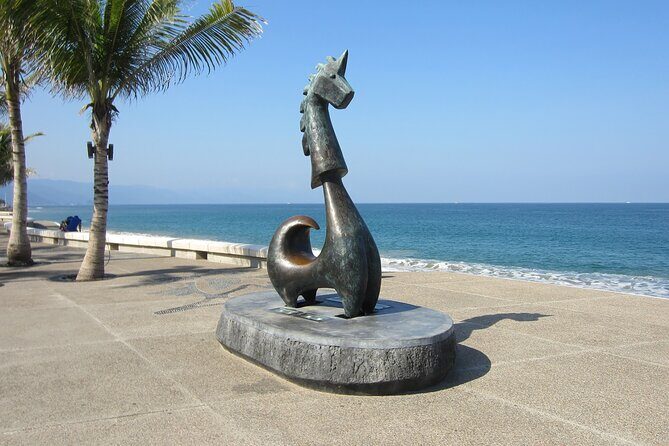
The tour begins at the Malecon facing the sea, at the point marked by the Boy on the Seahorse (Morelos s/n, Centro, 48300 Puerto Vallarta). The ending point is also clearly defined: you finish in front of The Millennia sculpture (C. 31 de Octubre 85, 5 de Diciembre, 48350 Puerto Vallarta).
Once you start, the VoiceMap app is your conductor. You’ll hear how the tour works, and then the audio cues guide you as you walk past each landmark and artwork.
Practical tip: download your offline content before you go. The tour’s offline promise is a big deal in a city where cell signal can be inconsistent. Having the audio and maps ready keeps you from getting that annoying moment where your phone goes quiet mid-route.
Also note: the tour does not include a smartphone or headphones. You’ll need both to use VoiceMap comfortably.
Stop-by-stop: what you’ll learn as you walk through El Centro
This is where the tour does something smart: it mixes architecture, public spaces, art, and small commercial stops. The stories aren’t just name-drops—they help you see why each place matters in Puerto Vallarta’s identity.
Los Arcos Amphitheater: why it was built
Early on, you pass by Los Arcos Amphitheater. The audio explains why it was built, so instead of only noticing it as a landmark, you get context for its role in the city’s public life.
Why it matters: amphitheaters and major public structures usually signal what a town wants to host—events, gatherings, performance culture. Even if you’re not planning to attend anything, the explanation gives the building a job, not just a view.
You can also read our reviews of more historical tours in Puerto Vallarta

Plaza de Armas: where people gathered, talked, and bought goods
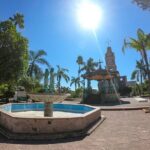
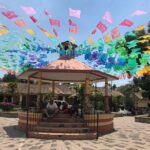
Next comes Plaza de Armas, described as a place where people gathered to gossip and buy goods over 100 years ago.
This is the kind of stop that helps you read the city’s social DNA. It’s not just “pretty square.” It’s a reminder that public plazas are where daily life used to concentrate—conversation, trade, and community.
Sergio Bustamante Gallery: one artist, many layers
You’ll pass by Sergio Bustamante Gallery while the audio shares the story of the famous sculptor.
If you’re the type who likes art more when you understand the artist, this is a good section. Galleries can feel like background scenery on a walking tour; here, the audio gives you a reason to pay attention.
Peyote People: step into a Huichol shop
Then there’s Peyote People, one of the oldest Huichol shops in Vallarta. You get an opportunity to pop inside.
This is one of the most practical “optional” moments on the route. If you want souvenirs that feel connected to a specific cultural tradition, this shop is exactly the kind of stop that can turn your walk into a lived experience rather than just sightseeing.
Vallarta Chocolate and Cigar Factory: a quick taste of local trade
The tour passes Vallarta Chocolate and Cigar Factory, with audio covering the store as you walk by.
Even if you don’t stop to buy anything, it helps to know these places are part of how the area earns its living—local products, local branding, local craft.
Villa Leonarda and Sergio Toledano: Liz Taylor and Richard Burton’s orbit
Next comes Villa Leonarda, owned by Sergio Toledano. The tour shares that Toledano was the adopted godson of Liz Taylor and Richard Burton.
If you’ve heard the names but never connected them to Puerto Vallarta’s physical landmarks, this section makes that connection feel real. It also explains why certain properties and locations in the city carry extra stories beyond their walls.
Casa Kimberly: the bridge used by Richard Burton
You’ll see the bridge at Casa Kimberly—the one Richard Burton used to cross to reach Elizabeth Taylor’s room when she stayed at the hotel.
This is pure “place-meets-story” tourism in the best way. You’re not just hearing famous names; you’re looking at a specific feature of the property tied to a specific moment in time.
Augustine Flores Contreras sculpture: education as a mission
The tour passes a sculpture of Augustine Flores Contreras, and the audio highlights that he championed and financially supported education until his death in 1975.
This stop adds weight. It’s not about glamour—it’s about social impact. You’ll likely notice how often monuments honor public leaders only when someone tries to make the story personal; here, the audio does that by linking the sculpture to a concrete cause.
Church of Our Lady of Guadalupe: a 40+ year build
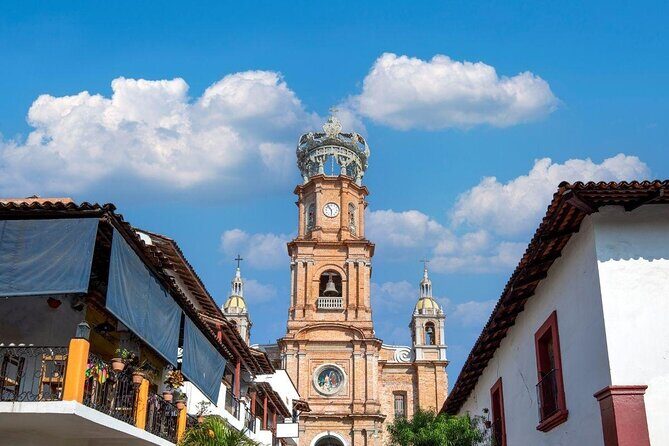
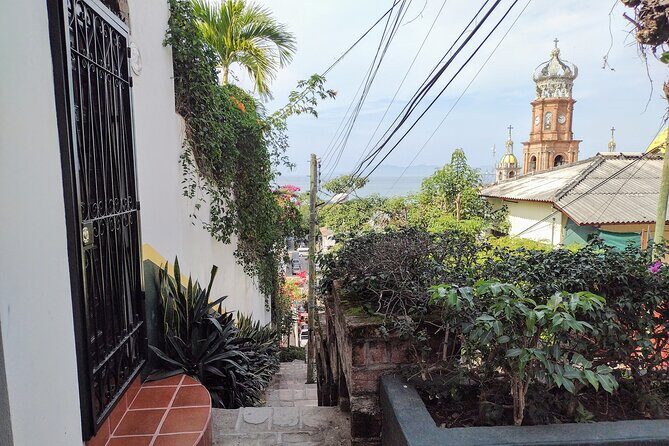
Then you reach the Church of Our Lady of Guadalupe, taking over 40 years to complete.
A long construction timeline changes how you interpret the place. Instead of seeing it as a single finished building, you get the sense of generations working toward the same spiritual center.
Faro del Malecón: a navigation signal from 1930
Next is the Faro Del Malecon, where the tour explains a signal placed there in 1930 to help ships navigate into a rocky harbor.
This is a great reminder that coastlines have real practical challenges. The lighthouse isn’t just romantic—it’s a tool that helped make maritime travel safer.
The sculpture trail: 30 works along the Malecón
As the tour follows the Malecón, you’re shown some of the 30 sculptures placed along it.
This is a smart way to turn a long shoreline walk into a scavenger hunt. If you’ve ever walked a sculpture-lined promenade and later wished you had more context, this part fixes that problem by directing your attention to specific works.
Sergio Bustamonte’s In Search of Reason
You’ll pass Sergio Bustamonte’s sculpture titled In Search of Reason.
Even if you don’t fully interpret the art in the moment, the title pushes you to look for meaning instead of treating it like decorative roadside metal. That’s the kind of gentle nudge that can make public art memorable.
Rotunda del Mar and Nature as Mother: 1997 installations
Two more sculpture stops follow:
- Rotunda del Mar by Alejandro Colunga, installed in 1997
- Nature as Mother by Adrián Reynoso, also installed in 1997
The shared installation year gives you a subtle theme: the Malecón continues to evolve with new public art. You’ll start to notice how the shoreline acts like an open-air gallery that keeps updating, not a frozen postcard.
Flying Papantla: why it matters
Finally, you’ll pass the Flying Papantla sculpture, with audio explaining the idea of Flying Papantla as you walk.
This is a culturally specific stop, and it can help you understand why certain public symbols stick around in a place. If you’ve seen Flying Papantla imagery elsewhere in Mexico, this section gives you a reason to connect it back to Puerto Vallarta’s public art landscape.
Finish: The Millennia sculpture
Your tour ends in front of The Millennia sculpture, so you’re not left wondering where you “wrap up” after the final story.
What I’d watch for (so you actually enjoy every stop)
This tour works best when you treat it like a guided conversation with the city, not a race to check boxes.
Here’s how to make it pay off:
- Use the audio cues rather than reading your phone. Let the phone stay in your pocket when you don’t need it.
- Pause briefly if a sculpture or plaza catches your eye. The walking pace is yours.
- If you get sidtracted (it happens), don’t stress about finishing every single segment. The route is designed so that each story stands on its own, and the parts you do catch still feel like a complete mini-experience.
A small note on atmosphere: the tour doesn’t depend on a museum schedule, because you’re primarily outdoors and moving between landmark points.
Who this tour is for
This Puerto Vallarta Historical El Centro audio walk is a strong fit if you:
- Want an easy, self-guided way to get grounded in the city’s layout
- Like public art and want help seeing sculptures instead of skipping past them
- Are visiting El Centro for a limited time and want more meaning per minute
- Prefer a tour you can do without arranging a meet-up with a guide
It’s also a good choice if you don’t want to commit to museum tickets, because the tour is built around what you can see directly along the route.
Quick practical FAQ-style notes (the stuff that matters)
Here are the key operational details you’ll want in front of you before you start.
FAQ
How long is the Puerto Vallarta Historical El Centro self-guided audio tour?
It runs about 1 hour to 1 hour 15 minutes.
Where does the tour start and end?
It starts at the Boy on the Seahorse (Morelos s/n, Centro, 48300 Puerto Vallarta) and ends in front of The Millennia sculpture (C. 31 de Octubre 85, 5 de Diciembre, 48350 Puerto Vallarta).
What language is the audio in?
The tour is offered in English.
Does it work offline?
Yes. It includes offline access to the audio, maps, and geodata.
What do I need to bring?
You’ll need your own smartphone and headphones. (The tour mentions smartphone and headphones as not included.)
Is food or drink included?
No. Food and drink are not included.
Is this a private tour?
Yes. Only your group will participate.
Are there any tickets or entrances required?
Tickets or entrance fees for museums or other attractions en route are not included.
When is the tour available?
The tour lists hours as 12:00 AM to 11:59 PM, Monday through Sunday.
Should you book this audio walk?
If you want a low-cost way to turn a Malecón stroll into something more meaningful, this is an easy yes. The biggest reason: lifetime access plus offline audio/maps for just $9.99 makes it a repeatable way to learn your way around El Centro.
Book it if you like walking, public art, and history tied to specific places—amphitheaters, plazas, sculptures, churches, and even the Hollywood-adjacent stories around Casa Kimberly. Skip it only if you strongly prefer guided tours with a live person, or if you don’t want to bring your own headphones and phone.